From Invention to Adoption: Nicolas Henchoz on What Makes Innovation Last
From Invention to Adoption: Nicolas Henchoz on What Makes Innovation Last
From Invention to Adoption: Nicolas Henchoz on What Makes Innovation Last
(Picture)
(DATE)
SEP 1, 2026
(CATEGORY)
Insights & Thoughts
(Picture)
(Information)
(Information)
Key takeaways from a Group 54 conversation with Nicolas Henchoz, Founding Director of the EPFL+ECAL Lab
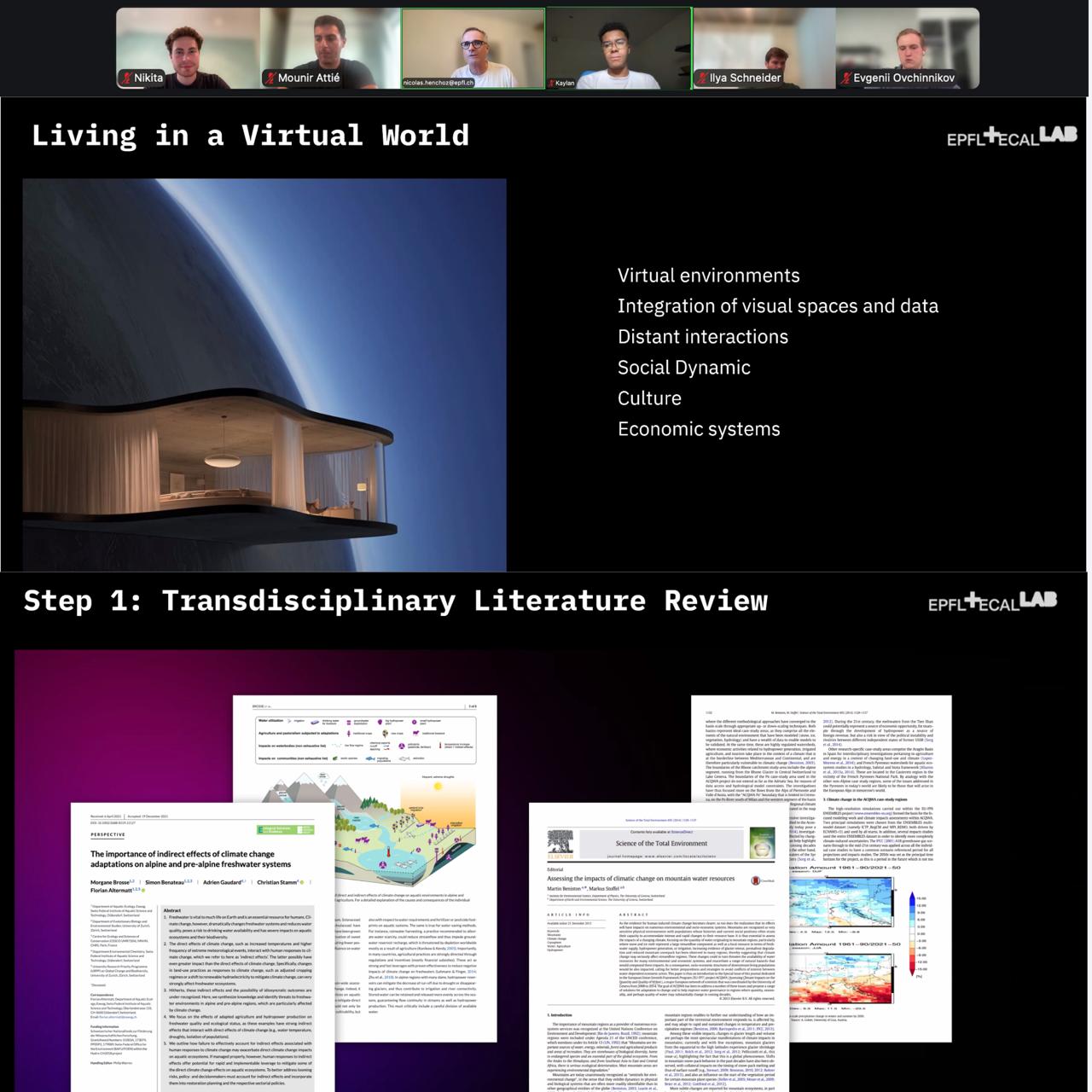
For our third Group 54 speaker session, Nicolas Henchoz joined us to discuss one central question: why do some innovations create lasting value, while others disappear after the initial “wow effect”?
Nicolas himself followed a highly non-linear path, moving from materials science at EPFL into journalism and television, before returning to EPFL and eventually founding the EPFL+ECAL Lab. That mix of engineering, media, design, and research has shaped the way he approaches innovation: by looking for connections across disciplines rather than treating technology in isolation.
Through projects developed with his lab, Nicolas showed one recurring pattern: technical performance may create excitement, but human adoption determines whether innovation lasts.
From the metaverse and virtual reality to healthcare, digital services and cultural heritage, the same issue kept appearing. Technologies can be impressive, but if they fail to account for trust, culture, perception, and real user behaviour, adoption often falls short.
Across the projects Nicolas presented, the same lesson kept emerging: people rarely reject innovation because of technology alone. Trust, perceived usefulness, cultural context, and the way a solution fits into everyday life often matter just as much.
This is why Nicolas’ team combines design, engineering, and psychology early in the innovation process, testing solutions in real contexts and identifying the factors that actually drive adoption.
His core message was simple: innovation is not only about invention. Lasting impact depends on whether people actually adopt, trust, and continue to use what is being created.
The member Q&A then expanded the discussion to cultural differences in technology adoption, trust in AI, the role of media in shaping expectations, the relationship between funding and innovation, and how smaller companies can compete by understanding users more deeply.
A big thank you to Nicolas for sharing his experience so openly and for giving us a much more grounded way to think about innovation.
We’re looking forward to more insightful conversations like this one, and to continuing to develop Group 54 into a community that brings real value to everyone involved.
Key takeaways from a Group 54 conversation with Nicolas Henchoz, Founding Director of the EPFL+ECAL Lab
For our third Group 54 speaker session, Nicolas Henchoz joined us to discuss one central question: why do some innovations create lasting value, while others disappear after the initial “wow effect”?
Nicolas himself followed a highly non-linear path, moving from materials science at EPFL into journalism and television, before returning to EPFL and eventually founding the EPFL+ECAL Lab. That mix of engineering, media, design, and research has shaped the way he approaches innovation: by looking for connections across disciplines rather than treating technology in isolation.
Through projects developed with his lab, Nicolas showed one recurring pattern: technical performance may create excitement, but human adoption determines whether innovation lasts.
From the metaverse and virtual reality to healthcare, digital services and cultural heritage, the same issue kept appearing. Technologies can be impressive, but if they fail to account for trust, culture, perception, and real user behaviour, adoption often falls short.
Across the projects Nicolas presented, the same lesson kept emerging: people rarely reject innovation because of technology alone. Trust, perceived usefulness, cultural context, and the way a solution fits into everyday life often matter just as much.
This is why Nicolas’ team combines design, engineering, and psychology early in the innovation process, testing solutions in real contexts and identifying the factors that actually drive adoption.
His core message was simple: innovation is not only about invention. Lasting impact depends on whether people actually adopt, trust, and continue to use what is being created.
The member Q&A then expanded the discussion to cultural differences in technology adoption, trust in AI, the role of media in shaping expectations, the relationship between funding and innovation, and how smaller companies can compete by understanding users more deeply.
A big thank you to Nicolas for sharing his experience so openly and for giving us a much more grounded way to think about innovation.
We’re looking forward to more insightful conversations like this one, and to continuing to develop Group 54 into a community that brings real value to everyone involved.
Related News
Related News


AUG 6, 2026
Blockchain Beyond the Hype: Where Is the Technology Really Creating Value?
Read More
Read more

JUL 26, 2026
Societies Are Growing Older. What Can We Do About It?
Read More
Read more

JUL 23, 2026
Our First Two Conversations at Group 54
Read More
Read more